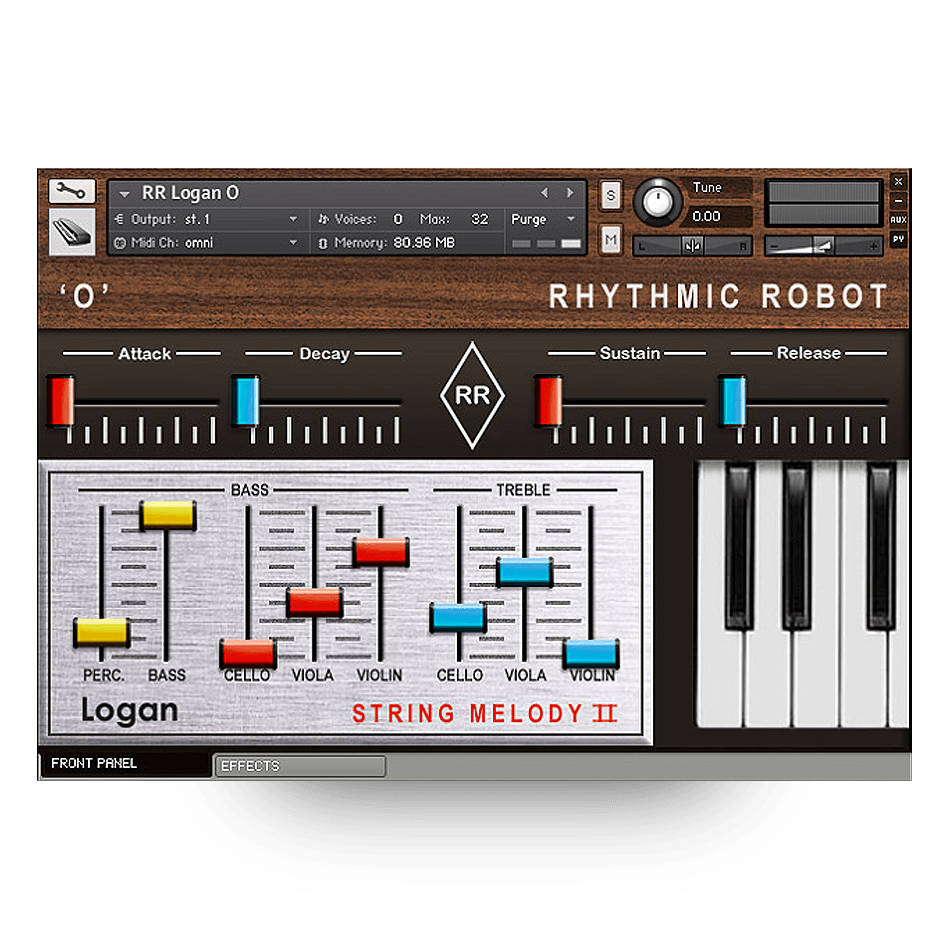
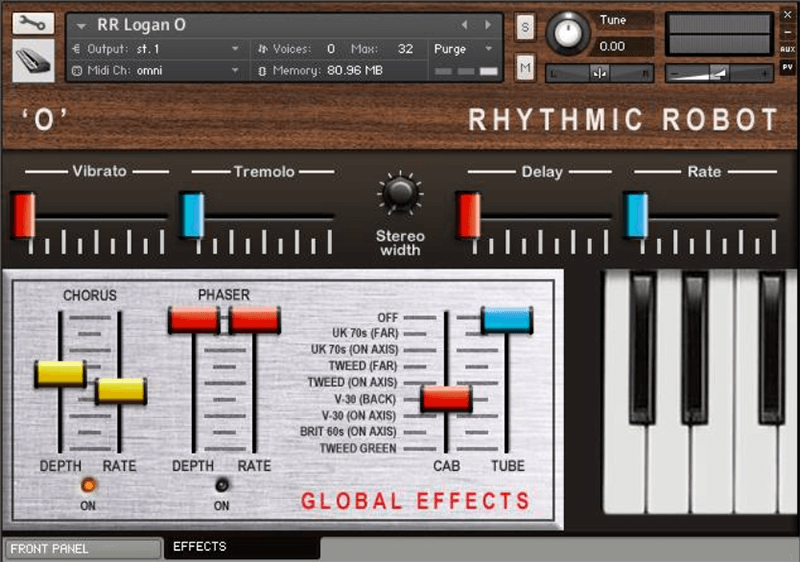
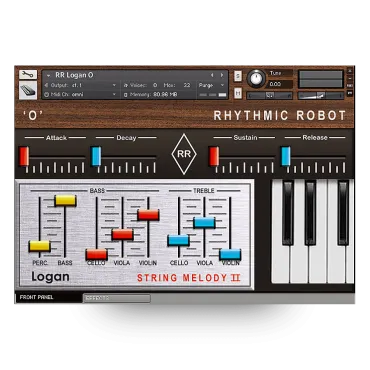
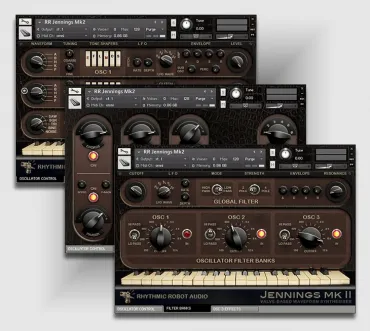
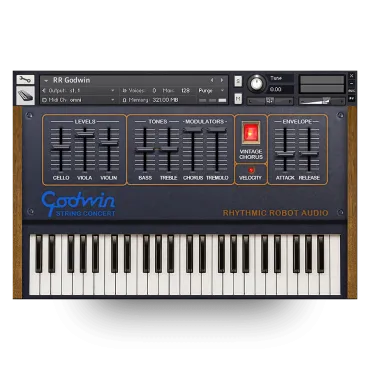
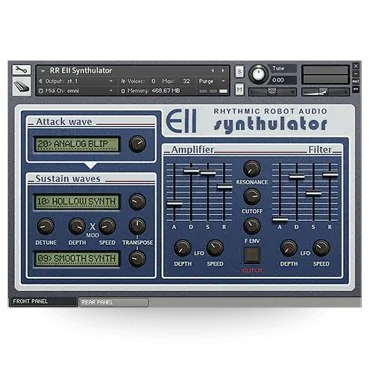
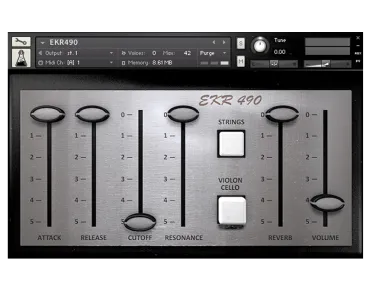
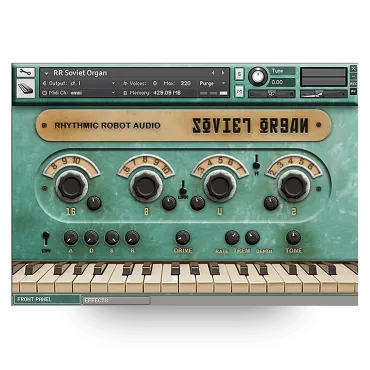
There’s more. We thought you’d like a bit more control than just Attack and Release, so we’ve slotted in a standard ADSR envelope on the front panel. Round the back, there’s more still: additional Chorus and Phaser effects (so you can add Chorus to, say, the Acc. setting, which doesn’t usually have it), plus separate Vibrato and Tremolo controls (with Depth and Rate), a nice warm Tube distortion circuit, and a set of cab models to emulate the sound of the Logan playing through an amp. These open up a whole wealth of different soundscape possibilities: we particularly like the cab effects, since the naturally spacious sound of the Logan can be made growly, dark, glowering and sinister with one cab, or thinned and made “smaller” for easier siting in a busy mix with another. Add in some Tube distortion and you can use the Organ preset as if it were a Hammond (though of course it sounds very different indeed!) This is where you’ll find the opportunities to build your own tones that extend far beyond the palette of the original instrument.
“Each instrument has a set of effects, such as chorus, phaser and cab simulation, the last capable of beefing up the Organ preset to pulpit-shaking levels, while the chorus and phaser transform the Solo preset, especially, into a pleasing alternate string synth. The samples are well recorded and every parameter is MIDI controllable… Actually, the biggest audible difference from the real thing is the lack of noise. I’ve never heard a Logan sound so clean!” – Sound on Sound magazine, November 2012
We really went to town on the sampling, too. Each chromatic note of the four-octave keyboard was sampled at 24-bit, for each of the registration stops, on each of the presets. These are long samples, too, to give the sound time to evolve, and they’ve been looped very carefully to preserve the cyclical components of the chorus effect. This makes Logan one of our larger instruments in terms of sheer Megabytage, but we really think it’s worth it.