Sign in to Loot Audio
Access your downloads, purchases and more
Access your downloads, purchases and more

Pulse is a revolutionary new downloader offering blazing fast speeds and powerful control over your libraries. Loot Audio uses Pulse to power some of our downloads and to make managing your libraries more efficient for you.
After your purchase we will send you a unique code (you will also find the code in your account). Use the code with Pulse to power your download and installation. More information about Pulse can be found here.
What are Credits?
You earn Credits every time you purchase a product from Loot Audio. 3% of your order is added to your account in the form of Credits.
Use Credits for money off future orders or convert them to Sample Credits to download samples from the Sounds section of the site.
SAVE 20%
30
DAYS
03
HOURS
46
MINS
47
SECS
$249.00
$199.00
Earn 532
9,000 Samples | 25 GB | 42 unique instruments.
Note: This product is compatible with Kontakt Full 7.6.1 and above
SAVE 20%
30
DAYS
03
HOURS
46
MINS
47
SECS
$249.00
$199.00
Earn 532
9,000 Samples | 25 GB | 42 unique instruments.
Note: This product is compatible with Kontakt Full 7.6.1 and above

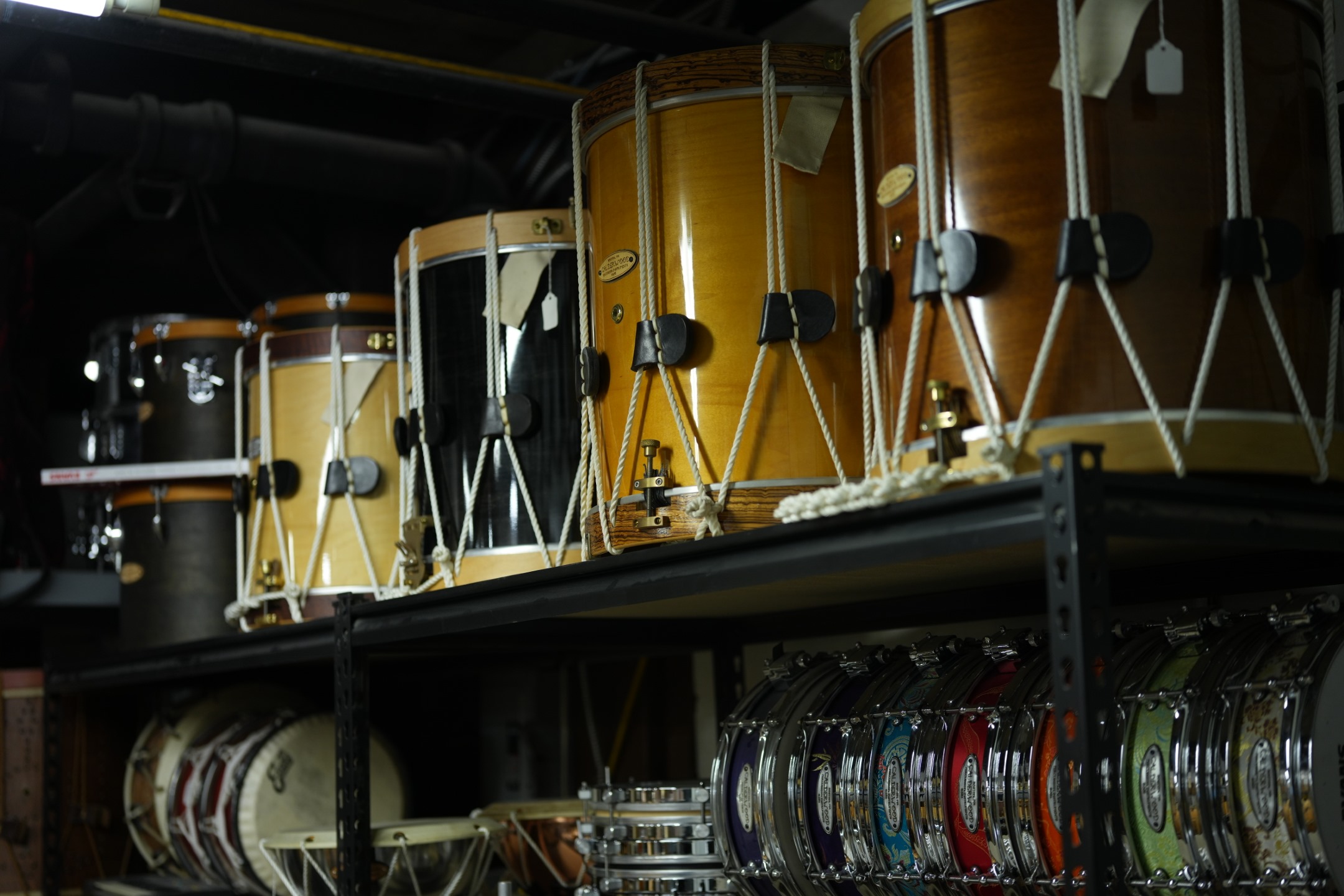
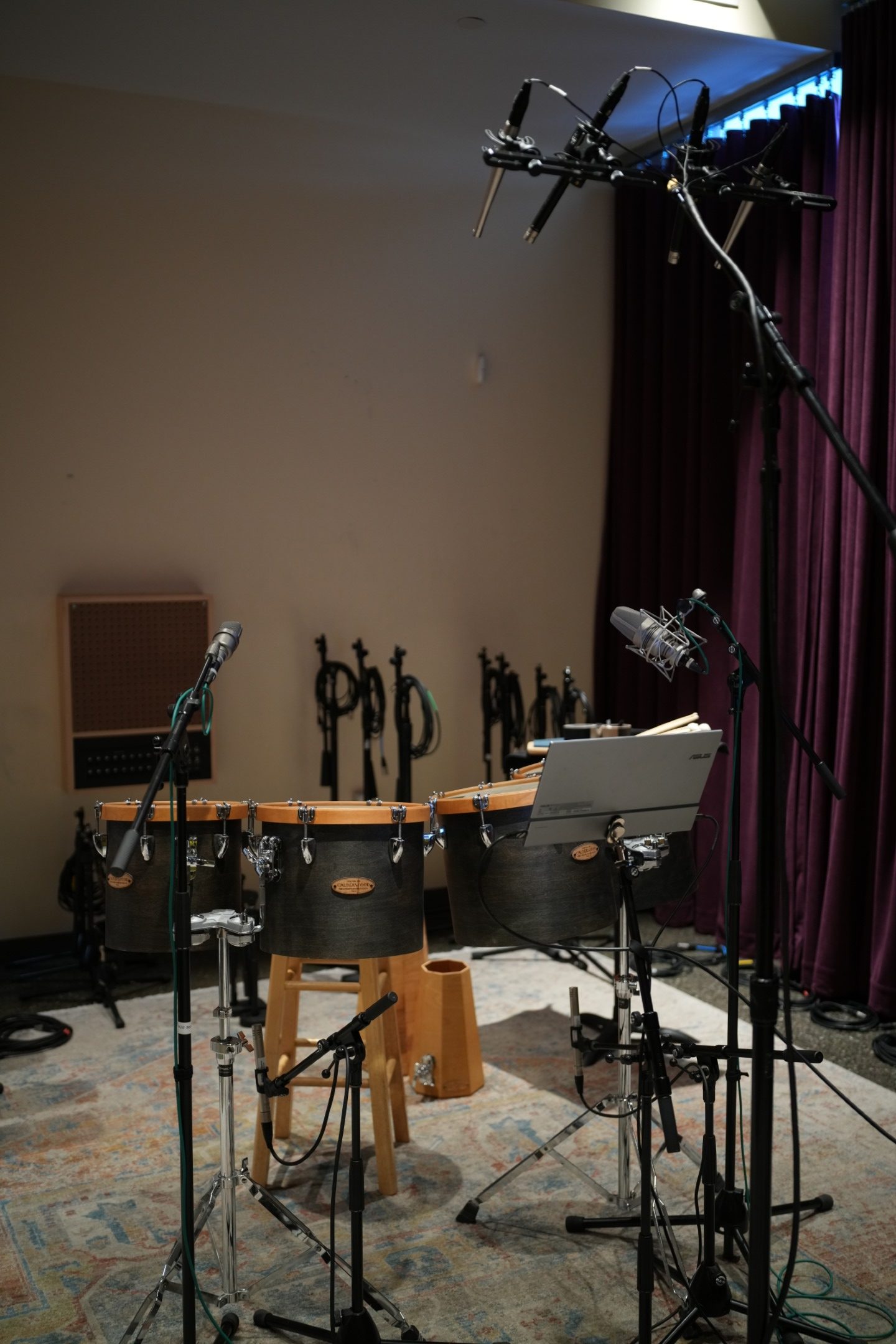
A specialist in rope tension drums, Calderwood Percussion has built drums for everything from the Broadway show Hamilton to TV soundtracks such as Black Sails and Outlander.
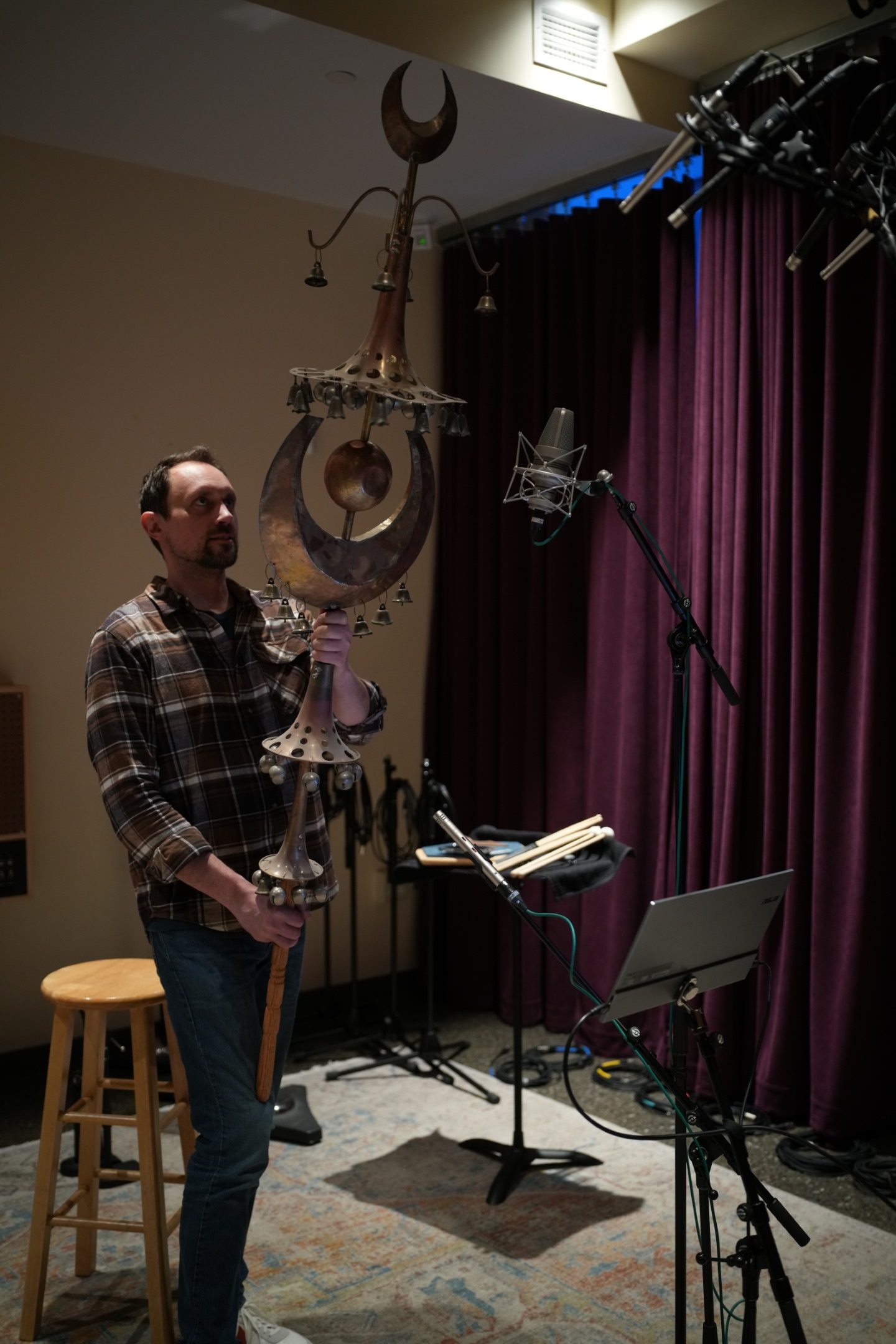
This library includes 42 unique instruments, including 10 snares, 10 field drums, 5 basses, 4 toms, plus unique historical types such as 3 tabors and a pair of nakers (ancestor of timpani), as well a a ‘Janissary Band’ consisting of a crescent, baroque triangle, cymbals, and a davul. A fun bonus set of octagonal cajons (‘Octajons’) were sampled as well.
Included is one of the world’s largest rope tension bass drums at an astouding 90″ (230 cm) diameter, with a fundamental of just 17 Hz!
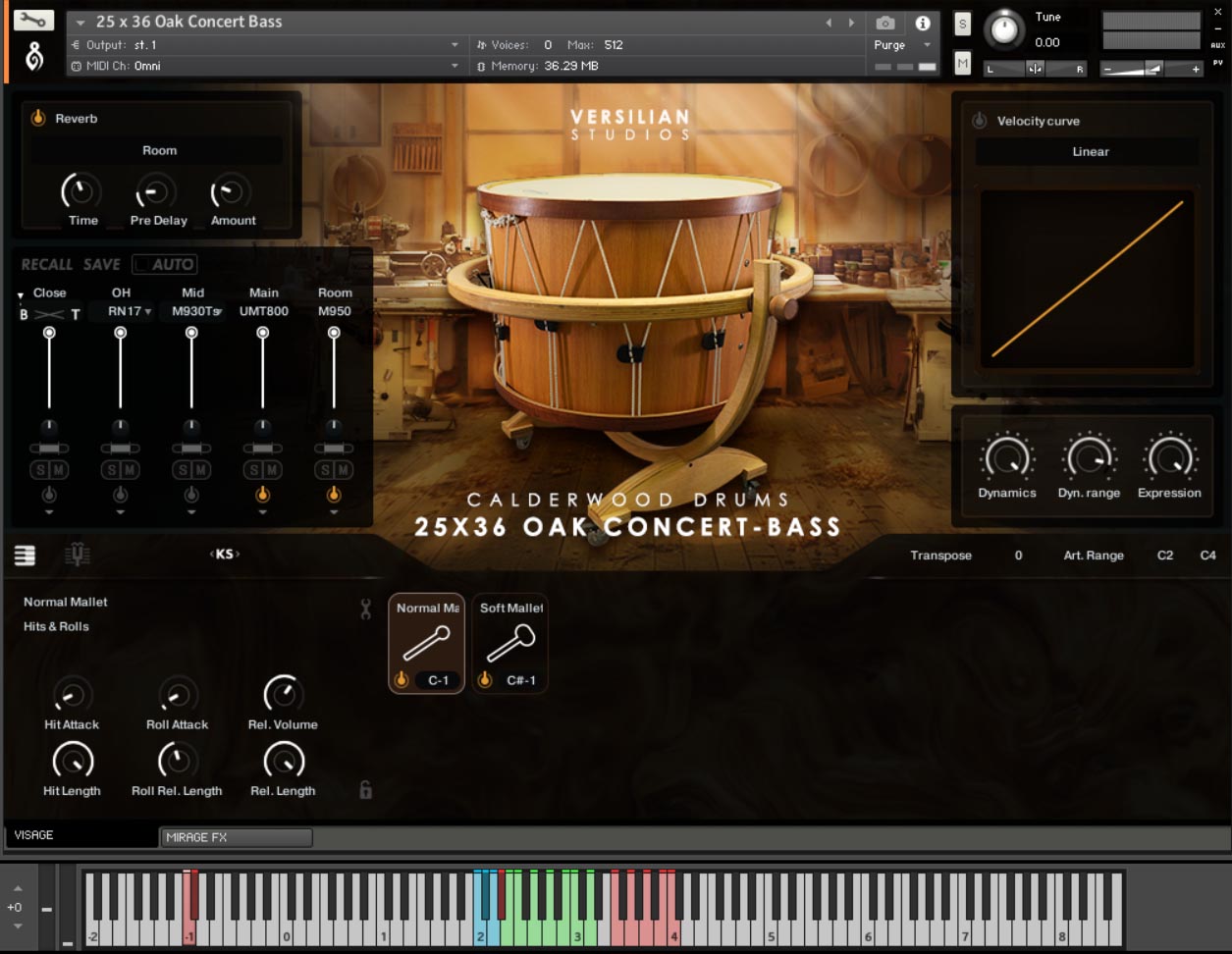
Utilizing the new VISAGE engine to its fullest, Calderwood Drums packs in a range of controls over every aspect of the instrument including but not limited to:
We invited the library’s original performer, Jonathan Hess, to the Calderwood Percussion workshop to demonstrate all of the drums via an electronic drum controller.
In the background, Calderwood’s William Austin Whitney and Versilian’s Sam Gossner are at the controls, adjusting mic mixes on the fly as Jonathan plays, showing off the huge range of sounds available.
Inspired by video game and film soundtracks, Simon has been improvising Versilian Studios playthrough videos from scratch since 2015.
Simon demonstrates the alternative control scheme, where velocity is broken out across a key range as opposed to stacked on a single key. The result is easier control over intensity and tone color.
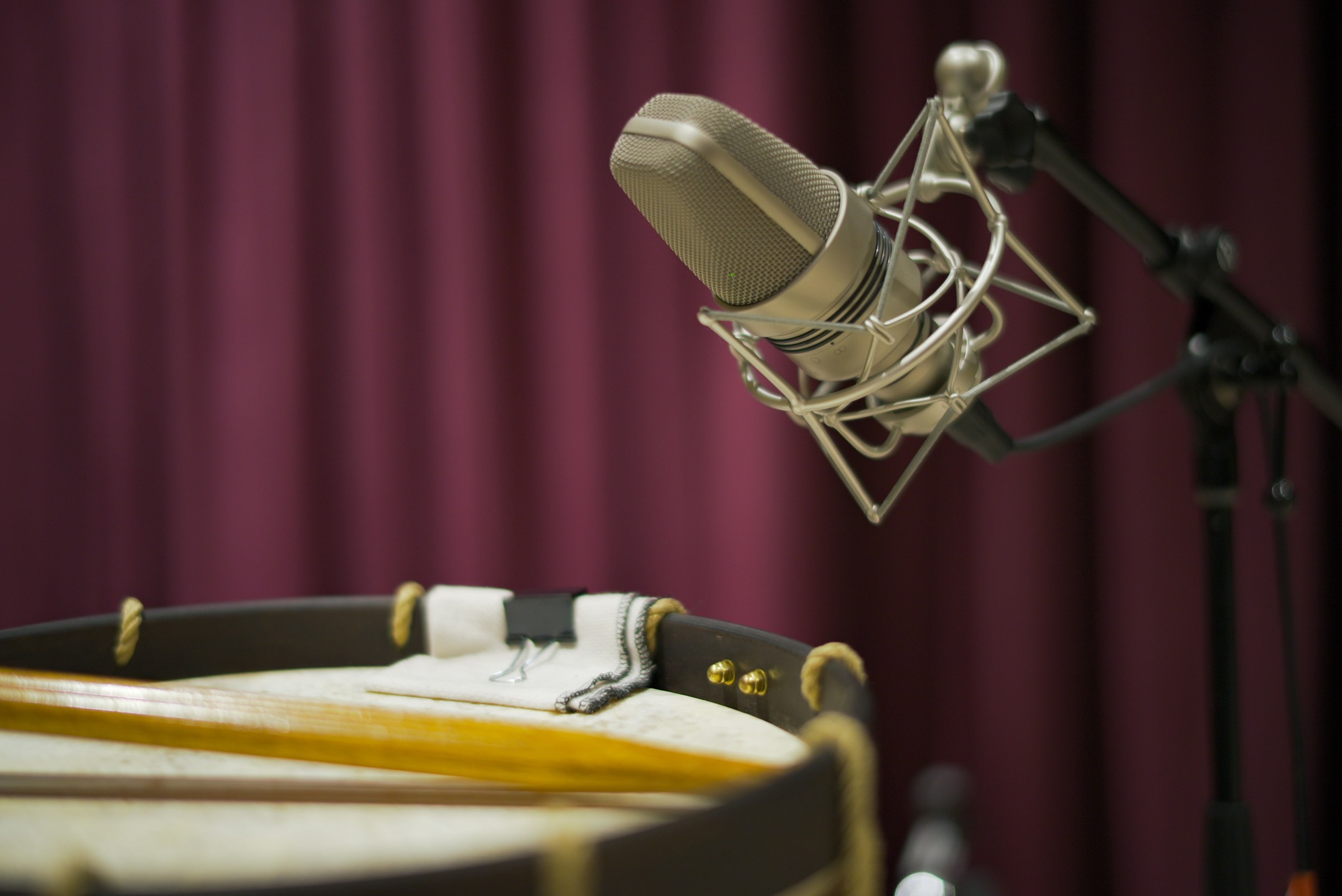
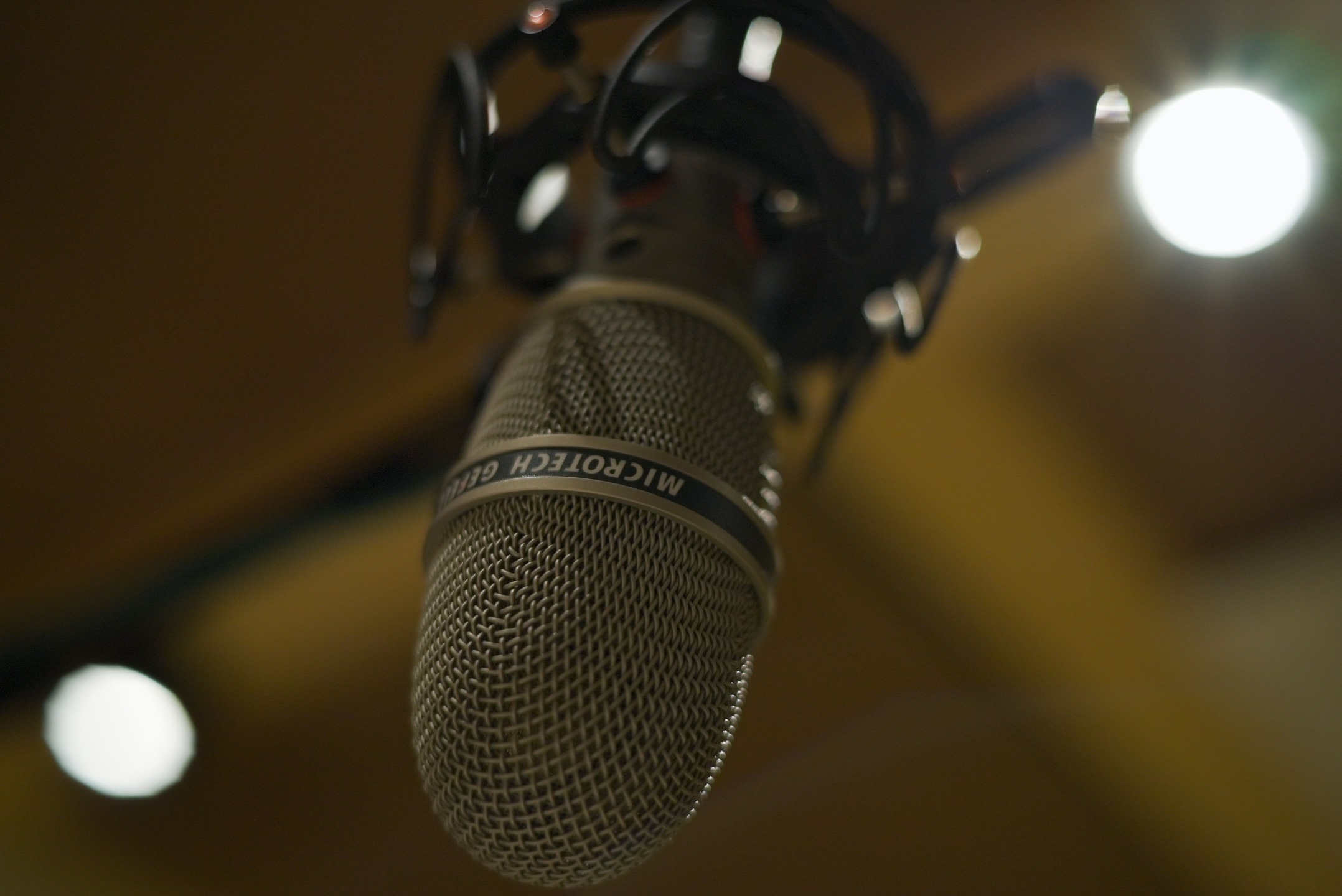
While many engineers reach for dynamic mics to cover the top head, this German behemoth (seriously, it weighs over a pound!) has a huge dynamic range of 135 dB with a max SPL of 142 dB SPL and a self noise of just 7 dB-A.
Used here in bidirectional (figure-8) pattern to provide the maximum isolation (and proximity effect), it has no problem delivering the beans on any drum while retaining impressive linearity and zero distortion across the library. Its uniquely articulate frequency response in this pattern emphasizes the articulation/strike of the drumstick against the head.
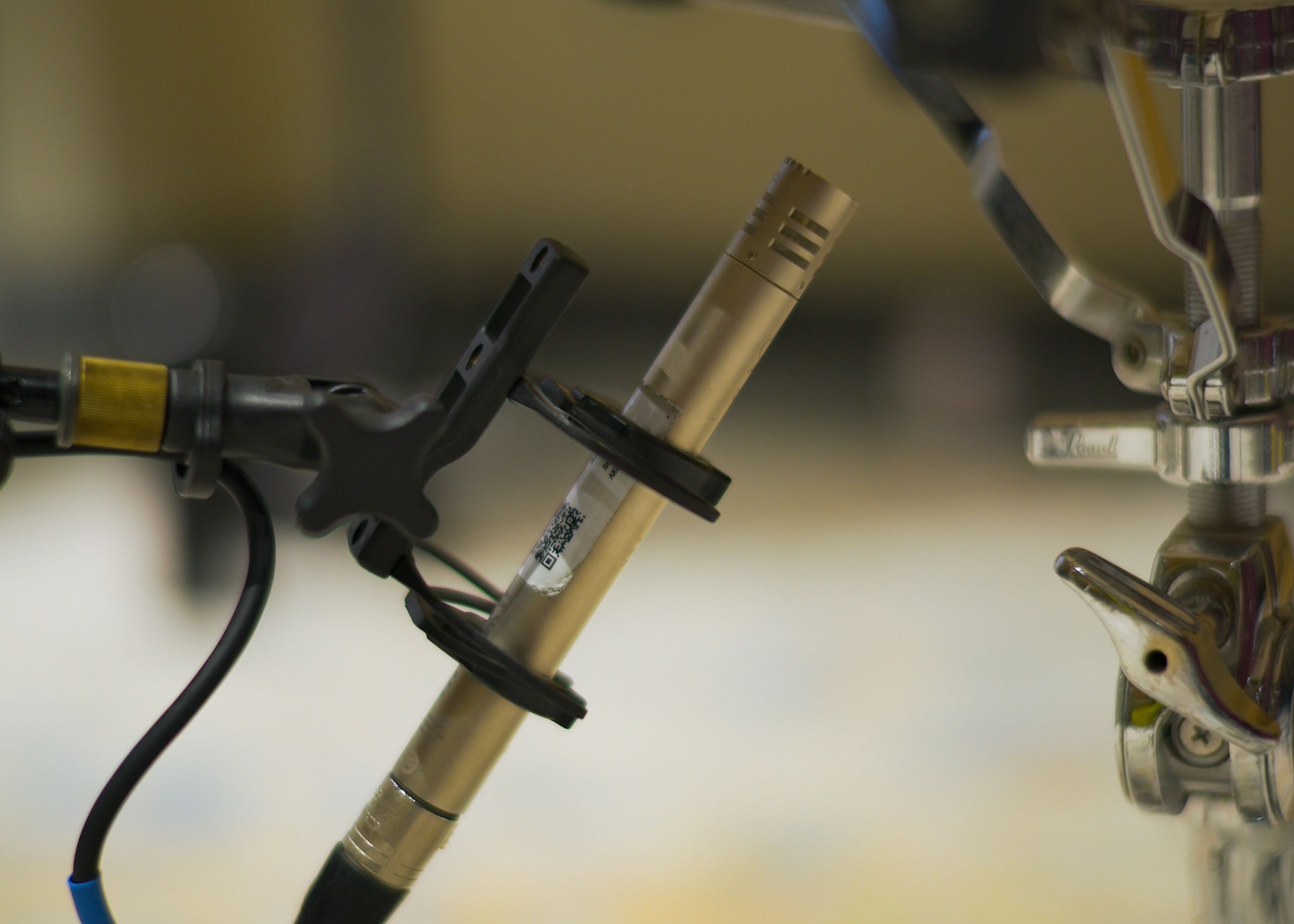
Few mics have earned their reputation on drums as the 451. Featured on countless recordings since the 1970’s, it has a considerable max SPL and a unique ‘bite’ to its sound thanks to a strong emphasis around 8-15 kHz.
The C451 B was chosen here specifically for the gritty way it renders snares from below, as a contrast to the heavyweight UM 930. By blending between these two mics, it’s easy to make the perfect close mic sound!
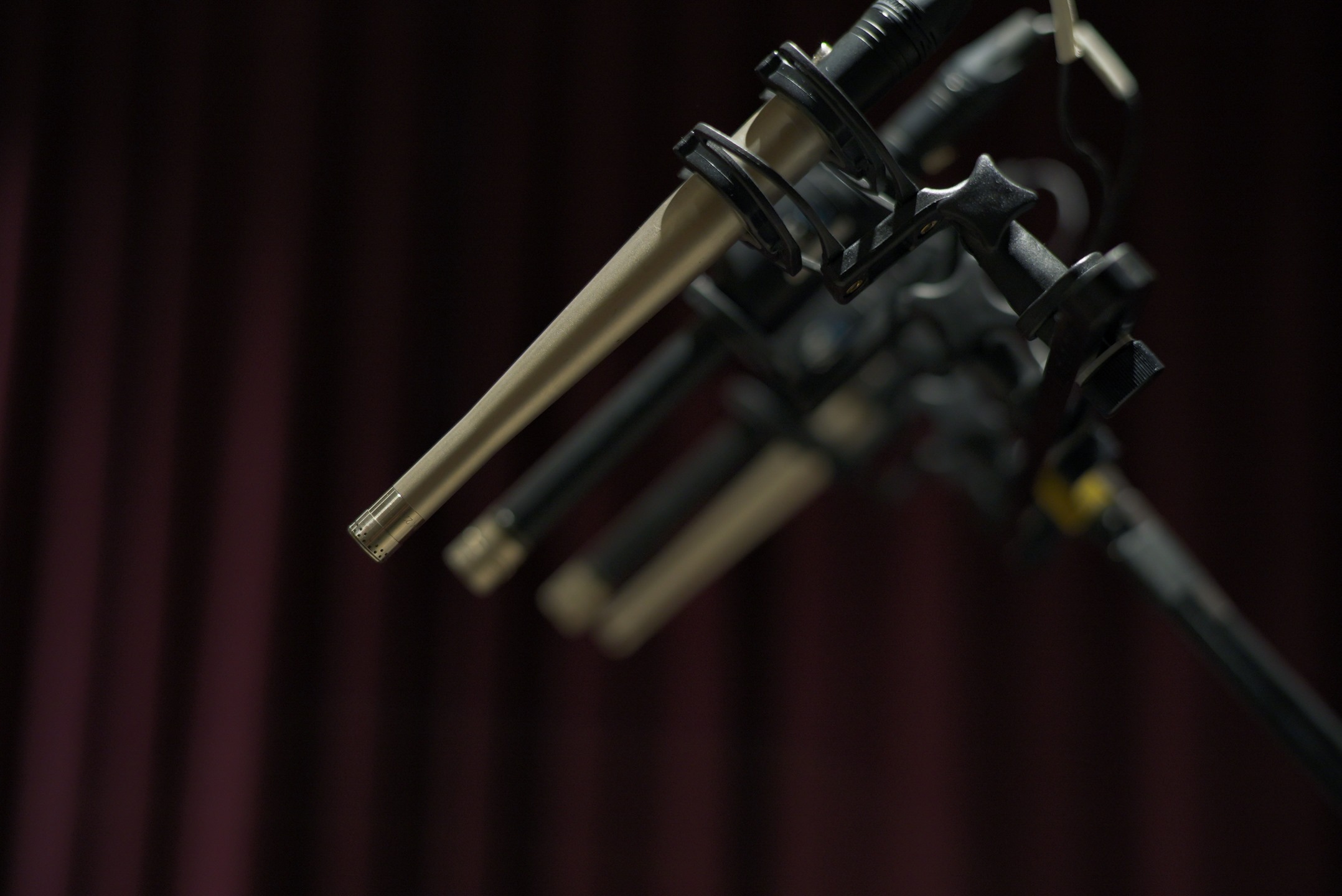
Created for the laboratory, with an ultra-thin diaphragm of pure nickel and flat response from 3.5 Hz – 20 kHz, the M 221 tackles transients like nothing else with linearity that would make standard recording mics blush and a sensitivity hot enough to clip many converters!
Used here at a consistent ~1 meter distance, this free-field omni captures sound as it is. Every reflection, every bounce, every detail. It hides nothing but says everything!
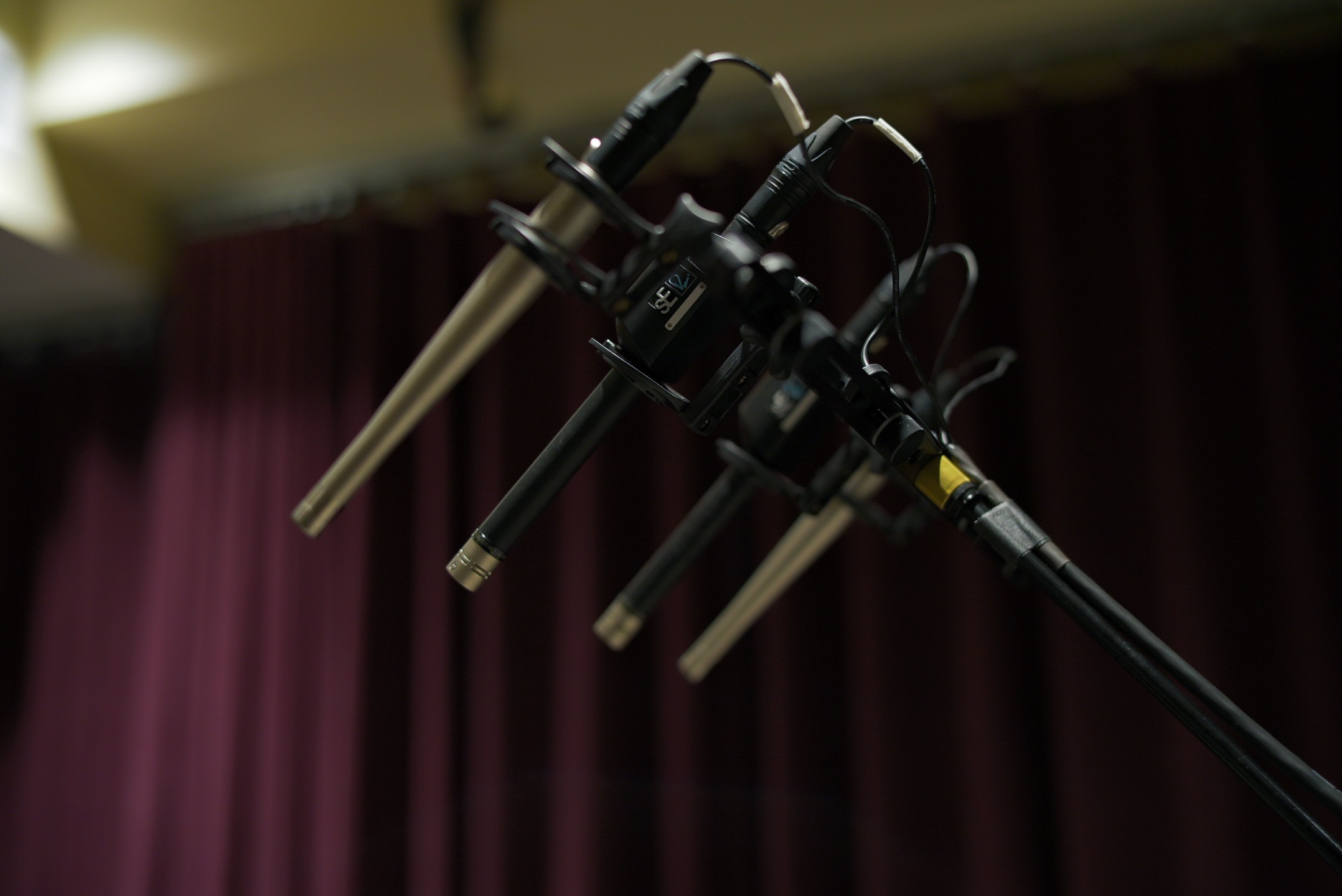
The brainchild of a chat between Rupert Neve and sE’s Siwei Zou, the RN17 marries a very small 15 mm diaphragm with a very large protruding transformer! We’re using the rare supercardioid capsules, which have a smoother sound and more isolation than the cardioids.
To contrast with the spacious linearity of the M 221’s, the highly directional RN17’s provide a colorful but focused capture of the drums, with more texture and grit to the sound. The narrower spacing enhances this tighter feel, blending with existing drumkit overheads and typical close mics in scoring stage and concert hall sample libraries.
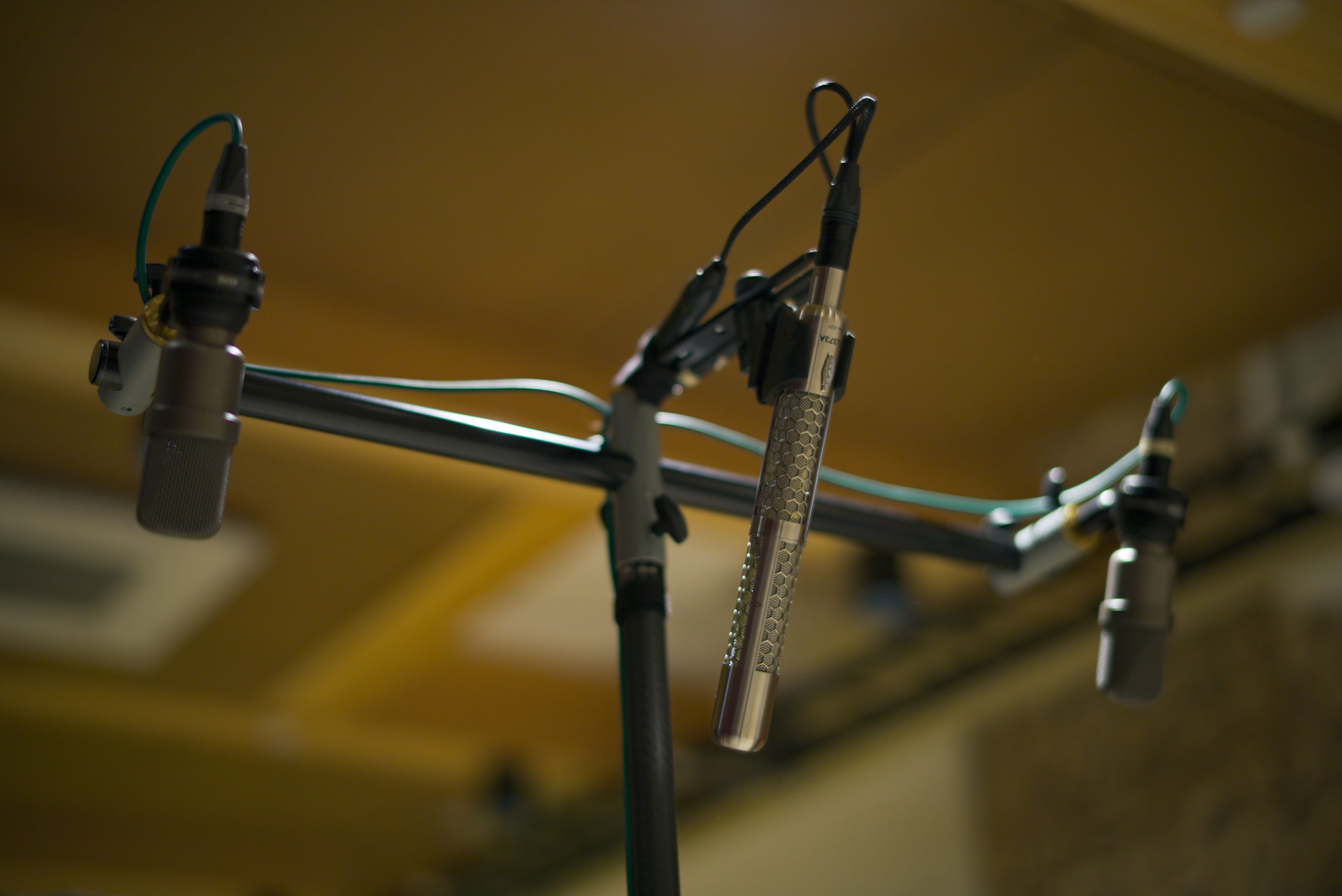
What happens when you combine an ultra-modern, super low noise LDC with the biggest Haufe transformer you can get away with? You get a mic with a response nearly flat down to 40 Hz, with a self noise of just 7 dB-A, and a huge max SPL of 142 dB SPL while driving an absurd +21 dBu without flinching.
The M 930 Ts has it all: texture, body, focus, and specs so good you can eliminate the words ‘pad’ and ‘noise’ from your vocabulary. This is one of our favorite mics from the library, with a very balanced sense of space and detail.
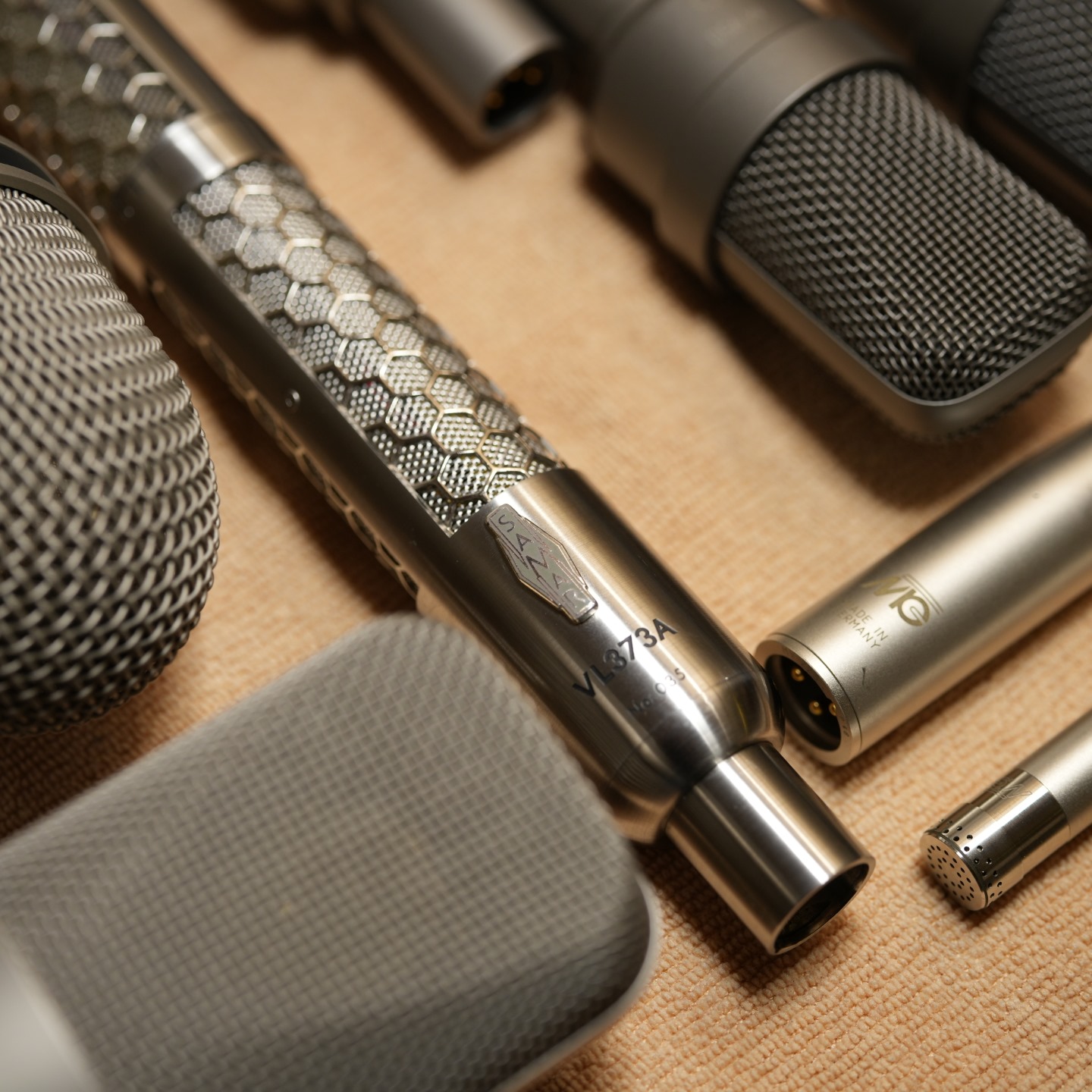
Created by one of the most visionary ribbon mic designers of the 21st century, the VL373A is a stereo active ribbon mic with a truly ‘modern’ sound rivaling many LDC’s.
The VL373A gently draws attention to the lower mids, naturally bolstering the weight and power of the drums.
Compared to the M 930 Ts, it is heavier and darker, and its blumlein configuration gives it a particular sense of width due to the highly linear degree of decorrelation the small AB array is not capable of. At the same time, it is also one of the most flexible arrays, being fully mono compatible and easy to adjust the width in post non-destructively.
Bearing the same legendary PVC M7 capsule used in early examples of the U 47 and M 49, the UMT 800 is a solid-state LDC with a smooth, presence-forward sound and gently rolled off low end. Its unique egg-like appearance reflects its birth in the post-reunification 90’s, while also lending it an unusually open character.
The UMT 800 here provides a recognizably familiar ‘vintage’ sound without the noise, distortion, and dynamic range limitations working with classical tube equipment. This makes the library easily compatible with major orchestral collections and other drum libraries using vintage microphones.
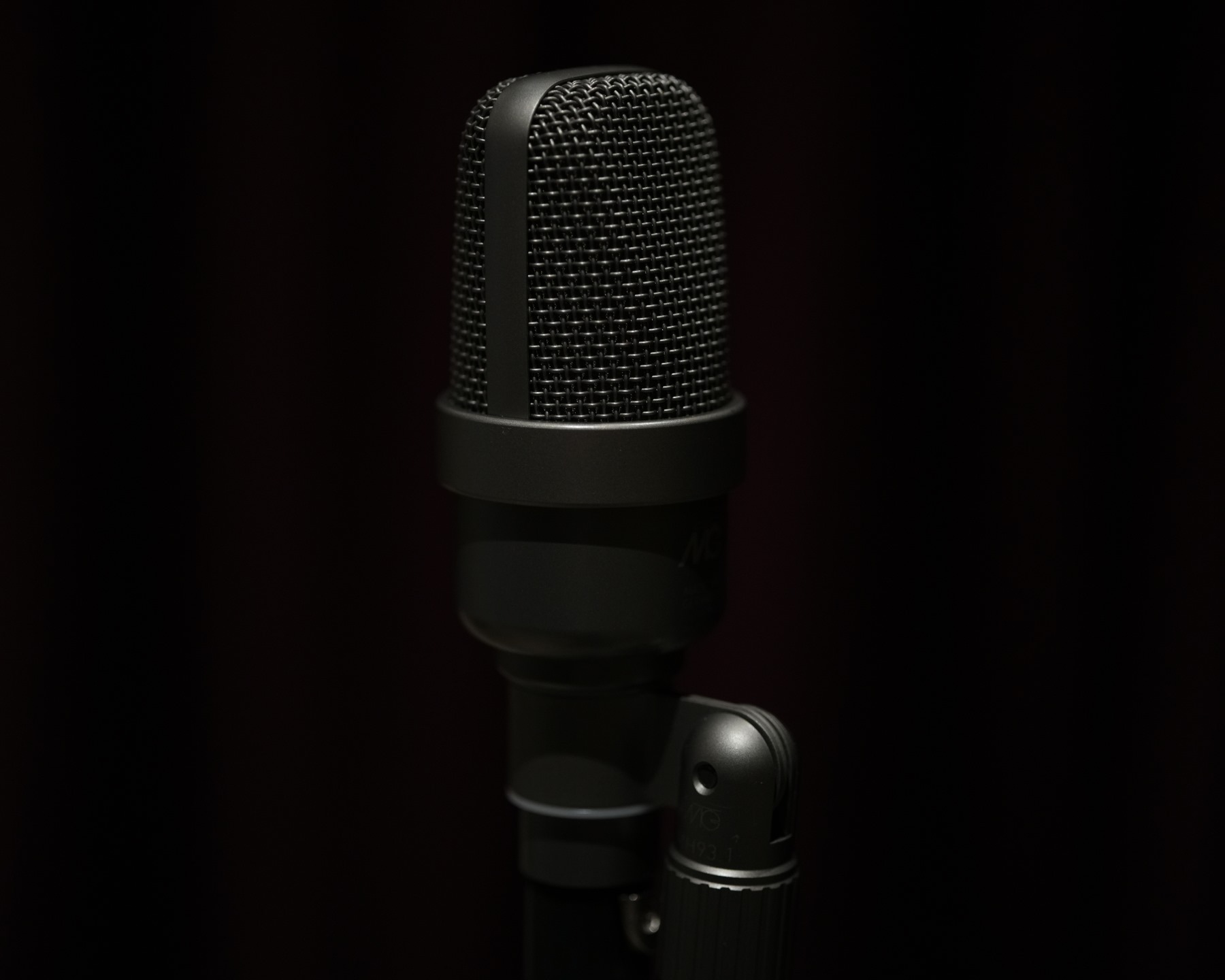
This high-tech wide cardioid LDC combines very low self noise (7 dB-A) with a bright, diffuse-field equalized sound reminiscent of classic room mics like the M 50.
The wide spacing and bright response of these mics provides a sizzly, decorrelated sound which is intentionally not time-aligned with the other mics. By mixing this in, you can add a sense of space and width to the instruments to better fit with orchestral packages recorded at a great distance or in large soundstage environments.
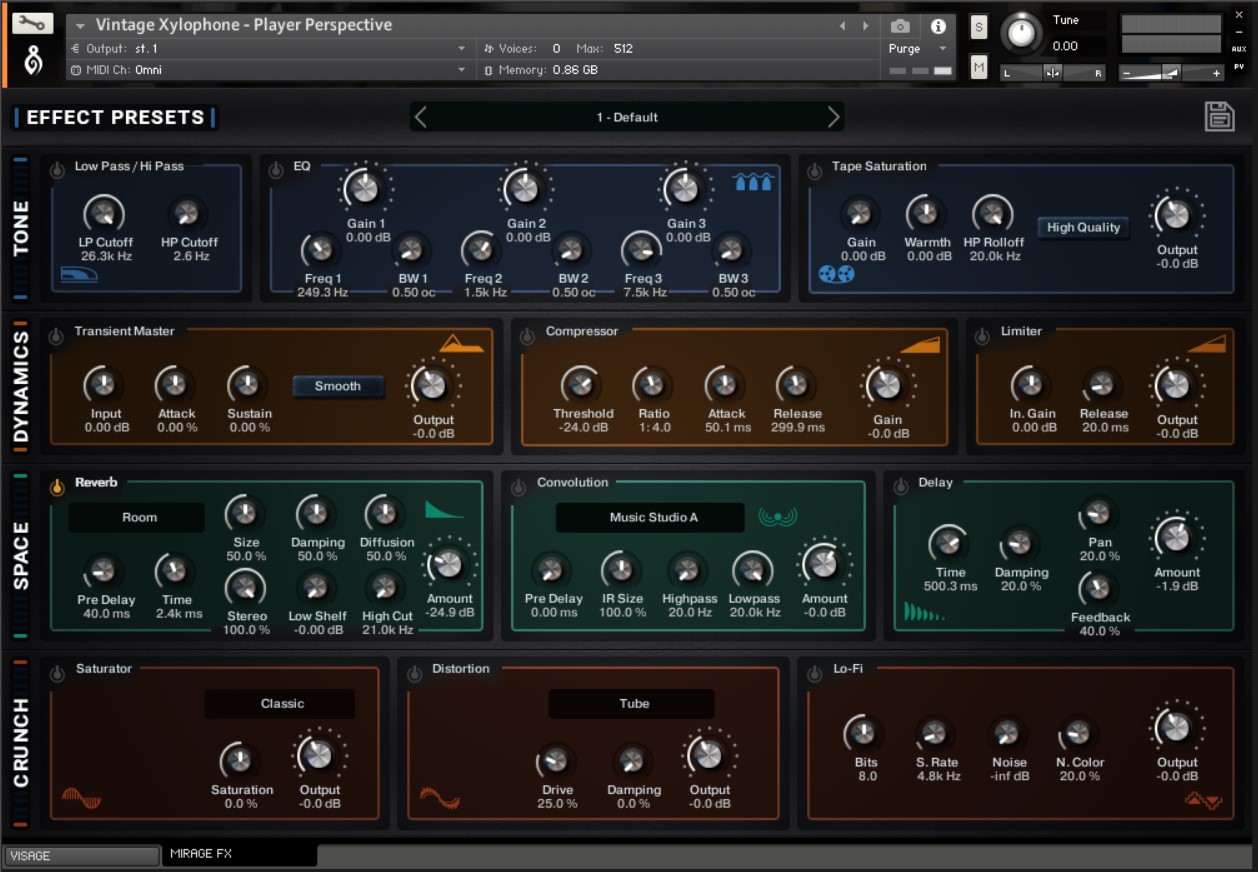
Calderwood Drums can be shaped and processed to work in virtually any style or context.
No compression was used at any point, allowing you to mix the drums like a live recording. Combined with the Dynamic Range control, the Transient Master on the Mirage FX tab, and the 9 mic positions, the amount of flexibility in drum tone and shape is staggering.
All mic positions except Room are time-aligned with sample-perfect (0.02 ms) precision, allowing them to be blended and combined at will without comb filtering/phasing.
A hand-calibrated linear-phase dynamic EQ was used to reduce unwanted noise (hiss and rumble) in samples while carefully retaining every detail of the transients, resonances, and reflections, often mangled by off-the-shelf denoisers and expanders/gates.
Tone-shaping EQ was kept to an absolute minimum, allowing the character of the mics to carry through to the finished product without sounding lifeless.
Great care was taken to ensure a consistent sample set without detracting from the unique character of each instrument.
Performed by percussionist Jonathan Hess, timpanist for Boston’s prestigious Handel & Haydn Society, each instrument was tuned and adjusted by Hess with assistance from Calderwood’s owner and builder, making adjustments as needed to ensure an ideal sound.
Each instrument family was recorded in the same spot and with the same microphones. This ensures that you can swap instruments of the same family out seamlessly for each other. VISAGE’s panning controls and integrated reverb makes it easy to then pan instruments out to construct your preferred layout.
Each instrument is sampled at between 7-14 dynamic layers depending on its unique dynamic range. The VISAGE engine allows you to control the dynamic range of each drum, avoiding the ill effects of dynamic compression often necessary on drum loops/phrases or live recordings.
A massive 12 round robins (RR) were recorded of each and every hit, flam, and drag on snares & field drums and 8 RR on tom, tabor, and bass hits.
Rolls were recorded at the same number of dynamic layers as hits and 2 RR with dynamic crossfading to allow you to construct easy and highly convincing crescendos and diminuendos using the Mod wheel (CC1).
All layers of rolls and hits are also broken out across a separate key range for easy triggering of individual layers as needed.
A massive 9 sets of microphones were consistently used to record the drums at various distances and with various sound qualities. These microphones were chosen for their low noise and high accuracy, over more popular recording mics an order of magnitude or two noisier or higher distortion. In doing so, objectionable post-processing such as denoising could be completely avoided.
Up close, mix between the ultra-high dynamic range Gefell UM930 LDC on top or a classic AKG 451B below, blending in just the right amount of snares and strike.
For the critical overhead role, two pairs of SDCs provide two contrasting views: the laboratory reference Gefell M221 measurement omnis vs. supercardioid transformer-equipped sE RN17 SDC’s. Space and precision vs. focus and color.
The mid position is filled by two options. First, a pair of transformer-equipped M930Ts LDC’s provide an ideal, balanced distance with superb detail. Alternately a Samar VL373A stereo ribbon contributes immense heft to the lower-mids. For some instruments, an extra alternate 414 or M940 are available in a low ‘waist-height’ mid position (we had some spare channels!).
For the main position, a pair of Gefell UMT800’s with the classic M7 capsule provide a neutral sound compatible with most other libraries using M7/K47 derivatives.
Further out in the room, a pair of Gefell M950 wide cardioids blend with your favorite samples from scoring stages and concert halls using M50’s or diffuse field omnis.
Developer: Versilian Studios LLC.
Software: Kontakt FULL 7.6.1+ Required
Format: .nki (Kontakt instrument)
Samples: ~9,000 Samples; 77,042 Sample Files
Instrument list
Filesize: ~25 GB of HDD space (+25 GB for installation files)
Other: HDD of 7200+ RPM or SSD recommended
8GB+ of RAM recommended
This product is downloaded using Pulse