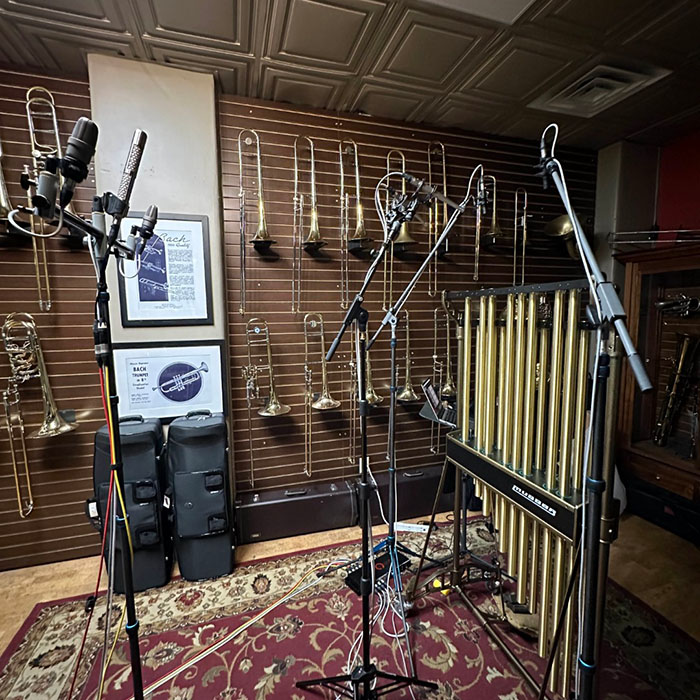
Approximately $15,000 worth of state-of-the-art recording equipment was utilized during the capture of Tubular Bells II.
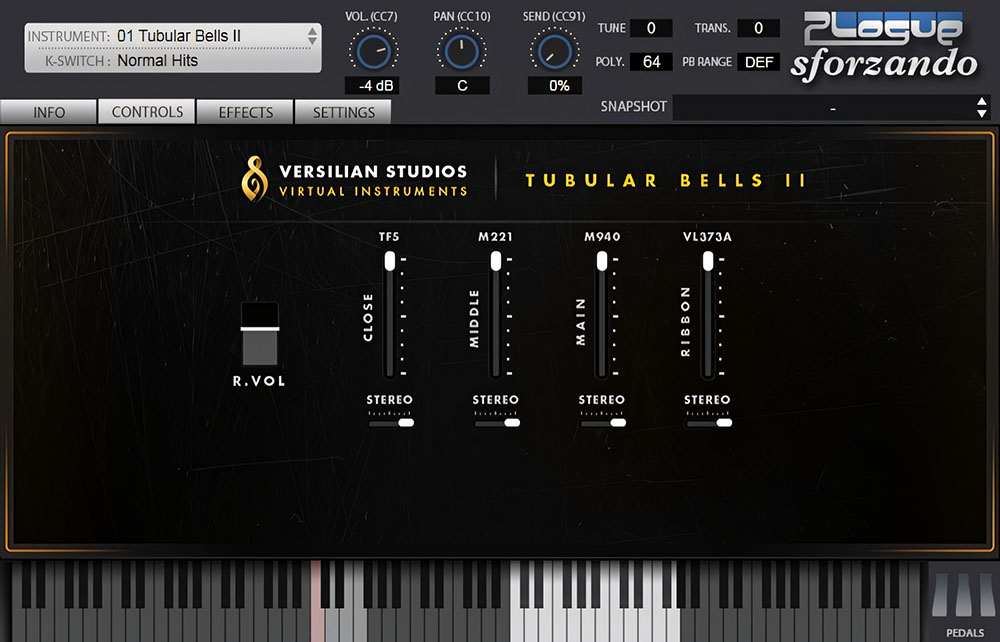
Up close, a pair of Rode TF5 overheads provide unmatched articulation and detail to the attacks. At mid distance, legendary Microtech Gefell M221 measurement omnis capture the perfect blend of body and detail with ultra-thin nickel capsules and a perfectly flat response.
For main mics, choose between the focused, ultra-low noise Microtech Gefell M940 supercardioid LDC’s or the relaxed sound of the Samar Audio Design VL373A stereo active ribbon mic for a smoother tone with gently eased edges. Or, use them both for the best of both worlds!
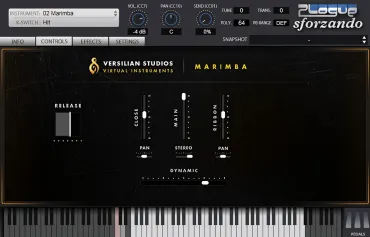
Microphones can be easily mixed together with volume and width controls to create the sound or blend you need to make Tubular Bells II fit perfectly with your existing sample libraries.
Processing was kept to a minimum, only using MAAT TheQ Red (linear phase EQ) for rumble.
Losslessly Compressed Samples (FLAC)
Compared to the original WAV samples used in the old standalone versions, the FLAC sample files used here are roughly 20-40% of the original size while retaining 100% of the quality, reducing the size of the entire collection to a comfortable 1.7 GB.
FLAC is also an open source format, and can be loaded and modified in most DAWs if desired.
Real Sampled Releases
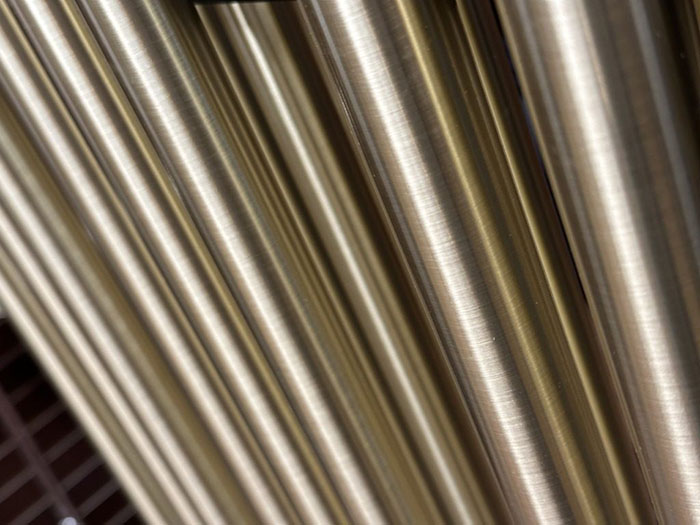
For Tubular Bells II and Tubular Bells VSCO 2, the true sound of the notes being cut off was sampled, providing a significant boost to realism. When you release a note or sustain pedal, the release sample is triggered.
In addition, a special set of ‘closed’ samples was recorded with the damper ‘up’, resulting in a short, sharp sound until you hold down the sustain pedal, perfectly matching the real behavior.
A set of ‘Simplified’ patches are also provided, which remove the damper behavior entirely.