



In an era of ultra-clean 32-bit floating-point digital audio workstations and clinical converters, why are music producers, beatmakers, and mixing engineers more obsessed with analog imperfections than ever before?
The answer is simple: digital recording is mathematically flawless, but the human ear thrives on texture, organic non-linearity, and acoustic warmth. Classic magnetic tape machines, vintage cassette decks, and golden-era hardware samplers impart subtle harmonic distortion, natural transient compression, high-frequency smoothing, and micro-pitch drift that bind isolated digital tracks into a cohesive, breathing record.
In this comprehensive guide, we unpack the physics behind vintage tape sound and explore the best tape, cassette, vintage coloration plugins, and dedicated lo-fi virtual instruments available on Loot Audio.
- Non-Linear Magnetic Saturation: As tape heads are driven harder, audio peaks gently round off through soft-clipping, adding rich odd and even harmonics that fatten signals without harsh digital distortion.
- Low-End Head Bump: A natural low-frequency resonance peak (typically occurring between 40Hz and 100Hz depending on tape speed) that imparts weight, body, and punch to basslines and kick drums.
- High-Frequency Compression & Softening: High-frequency energy saturates and compresses on magnetic tape faster than lower frequencies, effortlessly taming harsh vocal sibilance and brittle cymbal transients.
- Mechanical Wow, Flutter & Drift: Subtle periodic (flutter) and irregular (wow) pitch fluctuations caused by motor friction and tape transport irregularities that inject nostalgic motion and width.
1. AudioThing — Reels
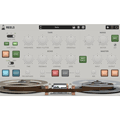
Unlike standard mastering tape emulations designed to mimic multi-thousand-dollar studio 2-inch tape decks, Reels is modeled directly on an authentic vintage 1970s Japanese portable reel-to-reel recorder originally manufactured for domestic voice dictation. The result is pure, unadulterated retro character.
 -68% OFF
Reels meticulously captures the distinct lo-fi idiosyncrasies of consumer tape mechanisms. It provides three selectable 1/4-inch tape formulations (Japanese, Italian, and Soviet tape stocks), each featuring unique harmonic distortion curves and frequency responses.
You can switch between 7.5 IPS (for relatively clearer playback with punchy saturation) and 3.75 IPS (which rolls off highs dramatically for that warm, muffled bedroom-pop tone). With an integrated tape-stop effect, continuous tape echo section, and independent controls for motor hum, hiss, and envelope-driven tape crosstalk, Reels is an essential tool for lo-fi hip-hop, indie rock, synthwave, and cinematic texture.
2. AudioThing — Wires
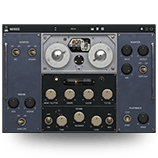
If reel-to-reel tape is not vintage enough for your sonic vision, Wires travels back even further into recording history. Created in close collaboration with avant-garde electronic composer and YouTuber Hainbach, Wires is an accurate emulation of the ultra-rare 1970s Soviet MN-61 / Protona wire recorder.
 -41% OFF
Engineered originally for military espionage, surveillance, and flight data recording behind the Iron Curtain, this machine records audio not onto plastic tape, but onto a hair-thin steel wire passing through an all-tube vacuum preamplifier stage.
The acoustic output of Wires is unlike any standard tape machine: it produces narrow bandpass mid-range filtering, haunting metallic resonances, fragile harmonic degradation, and unpredictable dynamic compression. AudioThing enhanced the original unit with variable echo time, tempo-synced delay repeats, and a switchable noise floor, turning modern synthesizers, drum machines, and vocal stems into spectral transmissions from a forgotten era.
3. EastWest Sounds — Lo-Fi
While many producers think of lo-fi solely in terms of effect plugins, EastWest Lo-Fi approaches character production from a fundamentally different angle: a massive, dedicated virtual instrument suite and producer toolkit running inside the flagship EastWest OPUS engine.
 -60% OFF
Lo-Fi
Instead of taking a sterile virtual synth and stacking external effect chains on top, EastWest Lo-Fi gives you hundreds of multi-sampled, dynamic instruments that have been intentionally degraded, driven through vintage vacuum tubes, pitch-warped, and re-recorded through classic cassette and tape decks at the recording source.
The collection spans heavily textured acoustic upright pianos, nostalgic Rhodes and Wurlitzer electric keys, dusty analog synths, atmospheric pads, detuned guitars, lo-fi orchestral brass and string textures, and gritty 808 sub-basses. Featuring onboard tape flutter engines, custom vinyl noise layers, dynamic filters, and macro tone-shaping controls, EastWest Lo-Fi is a complete creative workstation for beatmakers, neo-soul artists, and film composers who want instant, mix-ready analog instruments.
4. AudioThing — Vinyl Strip
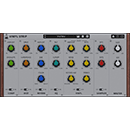
Vintage cassette and tape culture is inextricably linked with classic vinyl sampling. Vinyl Strip is a modular multi-effect channel strip that recreates the full journey of analog record production within a single, CPU-efficient plugin.
 -51% OFF
Vinyl Strip features six modular processing units that can be freely arranged in any sequence via intuitive drag-and-drop:
- Distortion: Adds warm, asymmetrical tube overdrive and analog grit.
- Compressor: An optical-style leveling amplifier designed to glue dynamic elements together.
- Bit Crusher: Selectable sample-rate and bit-depth reduction for gritty vintage digital texture.
- Tilt EQ: A single-knob broad tonal balance filter that effortlessly tilts audio from dark and murky to bright and crisp.
- Vintage Reverb: Adds atmospheric spring and plate reverberation.
- Vinylizer: Generates authentic vinyl surface noise, crackle, pops, and 33/45/78 RPM rotational warp.
5. D16 Group — Decimort 2
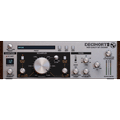
No discussion of vintage coloration is complete without addressing early digital sampling grit. For producers who revere the punchy, crunchy low-end and distinctive bite of vintage 12-bit samplers like the Akai MPC60, S950, and E-mu SP-1200, D16 Group's Decimort 2 is considered the gold standard.
 -50% OFF
Decimort 2 is far more than a simple bitcrusher. It meticulously emulates the entire non-linear signal path of vintage samplers, including their steep analog anti-aliasing input filters, ADC/DAC clock jitter, and harmonic quantization distortion.
With advanced multi-algorithm resampling, adjustable frequency-dependent jitter, controllable image harmonic filters, and dual multimode resonant analog filters, Decimort 2 adds an unmistakable punch and weight to modern drums, samples, and synths that allows them to cut through a dense mix effortlessly.
To achieve an authentic vintage record feel without muddying your mix, use a two-stage approach. Apply heavy character processing (like AudioThing Reels or Wires) directly to individual melodic elements (such as electric pianos or lead guitars) with aggressive wow/flutter. Then, place a subtle instance of tape saturation across your master mix bus with minimal flutter and 1–2dB of gain reduction to glue the entire track together naturally.
Summary: Which Character Tool Is Right for You?
- For authentic consumer reel-to-reel warmth and tape-stop effects: Choose AudioThing Reels.
- For eerie, historical metallic echoes and espionage sound design: Choose AudioThing Wires.
- For a complete, playable library of degraded keys, synths, and orchestral instruments: Choose EastWest Lo-Fi.
- For an all-in-one modular vinyl and tube channel strip: Choose AudioThing Vinyl Strip.
- For golden-era 12-bit sampler crunch and punchy drum grit: Choose D16 Group Decimort 2.
Explore the full collection of character plugins and virtual instruments on Loot Audio today and give your productions the warmth and imperfection they deserve.