Sign in to Loot Audio
Access your downloads, purchases and more
Access your downloads, purchases and more

Pulse is a revolutionary new downloader offering blazing fast speeds and powerful control over your libraries. Loot Audio uses Pulse to power some of our downloads and to make managing your libraries more efficient for you.
After your purchase we will send you a unique code (you will also find the code in your account). Use the code with Pulse to power your download and installation. More information about Pulse can be found here.
What are Credits?
You earn Credits every time you purchase a product from Loot Audio. 3% of your order is added to your account in the form of Credits.
Use Credits for money off future orders or convert them to Sample Credits to download samples from the Sounds section of the site.
Hammonds Only Synth
$21.00
Earn 50
Note: This product is compatible with Kontakt Full 5.8.1 and above







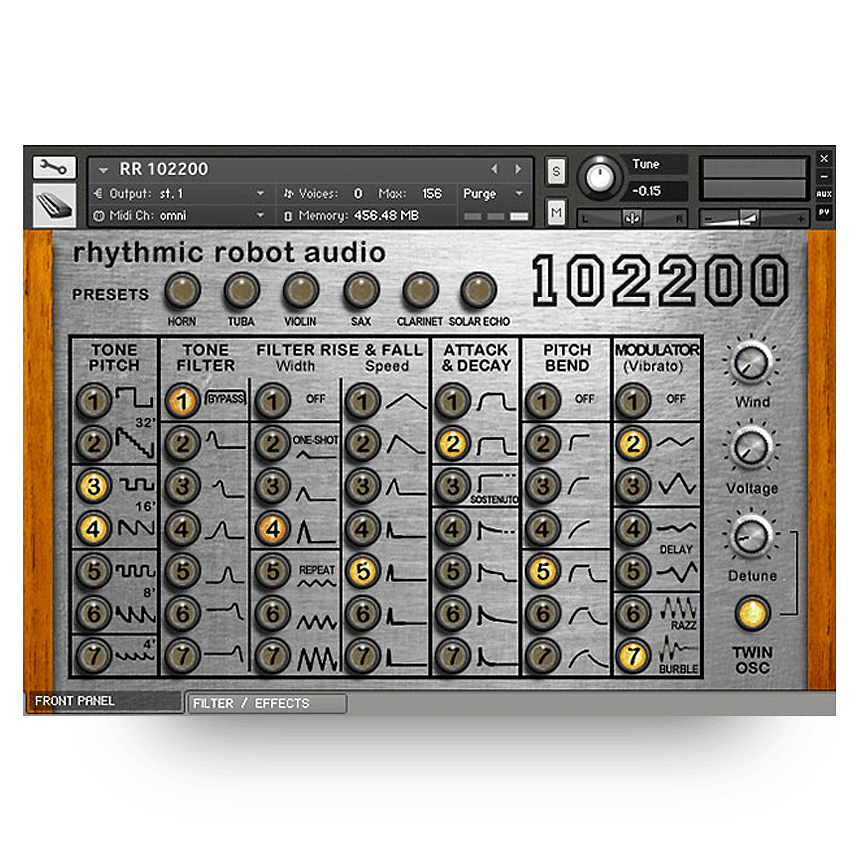
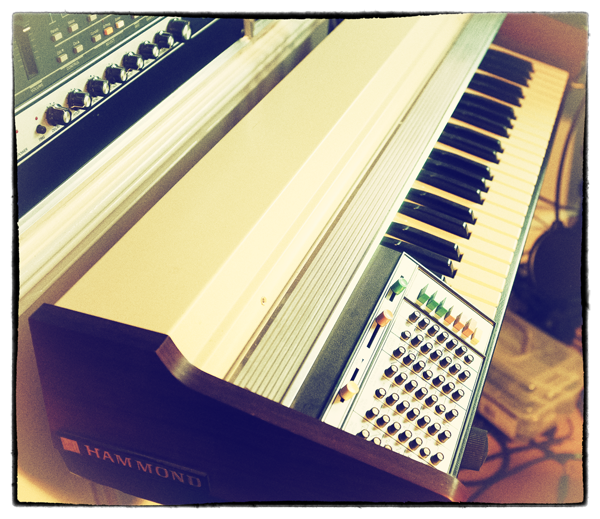
Instead of user-friendly knobs and sliders, the 102200 sports a matrix of 49 pushbuttons, plus six presets and a noise source on its own slider. Users could either select one of the six presets – which include the wonderful Solar Echo, the 102200’s sole moment of cool – or else deselect the presets and create their own tones using the button matrix.
This basically engaged a behind-the-scenes series of components: an oscillator with square and sine waves at a variety of footages, a filter, three envelopes patched to amp, pitch and filter, and two LFOs patched to pitch and cutoff. These all sported up to seven preset settings controlling things like filter resonance, cutoff, LFO speed and so on. By combining these you could – eventually – punch together your very own patches.
The whole thing was unintuitive and rather let down by the single oscillator, which lacked depth. But the filter sounded good, and the overall nerdy vibe had its own odd appeal. Sadly, the 102200 failed to catch on, and not many were sold, which now makes it both pretty rare and largely unheard.
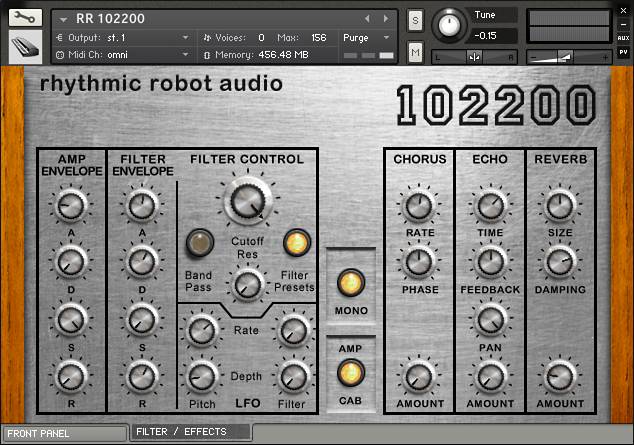
Our version starts by addressing the three key failings of the original. Firstly, it’s polyphonic. Secondly, it allows you to combine and stack up to 21 oscillators simultaneously, and detune them, for a properly thick and lush sound. And most importantly, while it recreates that insane button matrix on its front panel, it also liberates you from it if you’d prefer to work in a more familiar knob-based manner – just click over to the rear panel, and dial away. In what’s becoming a bit of a signature motif for us, this allows you to use the 102200 exactly as the original… or ditch authenticity and push the instrument into whole new territories.
Tonally, the 102200 seems to have a strong affinity for radiophonic-workshop type sounds – sci-fi burbles, bleeps, tremors and vibrations just come flooding out of it. There’s a faded industrial edge to some of its tones which can be great for adding something odd and unusual to your mix; a kind of metallic, granular, almost rusty sonic palette which conjures up distressed and abandoned alien cities overrun by red sand dunes. (Well, it does to us, at least. Too much Heinlein when we were kids.) Played monophonically it really feels vintage to its core, while the polyphonic patches have a great air of nostalgic texture to them.
AMAZING OSCILLATOR
The overriding impression we got from our 102200 is of an instrument that had great potential, but swerved off-reservation before attaining it. The filter is great. The oscillator is great… but there’s only one of it. And the buttons look futuristic and cool, but are actually rather weird to use. If Hammond had pursued their synth adventure just a little further, there’s every chance they could have come up with something genuinely powerful; but sadly, the 102200 became one of a kind. Which is kind of why we like it.
5.0/5.0
(Average of 2 reviews)
Sort By: