In the early 1980s, while Silicon Valley focused on personal computers, brothers Bob and Al Gleeman were working in a Mountain View garage on a portable polyphonic synthesizer designed to hold its tuning under stage lights. Al, an electrical engineer, handled the design, while Bob, a musician, managed the business, creating a unique instrument that would stand out in a market filled with analog polysynths like the Prophet-5 and Memorymoog.
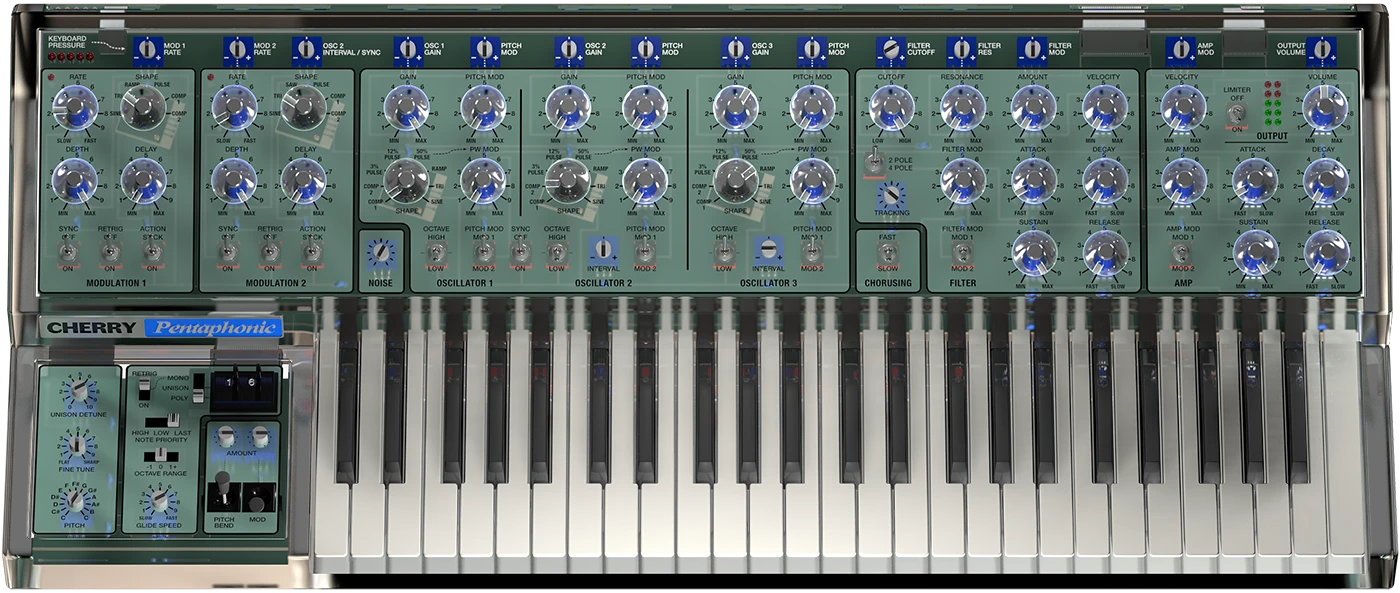
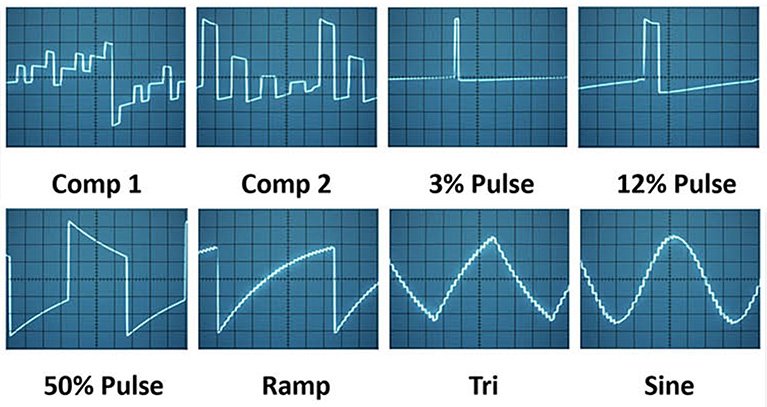
The Gleeman Pentaphonic featured five voices (hence "penta") with fifteen DCOs using a pair of Intel 80186 microprocessors to ensure precise tuning that analog models couldn't match. Each oscillator offered eight waveforms, including two harmonically rich "complex" waveforms. These were low-resolution, 32-sample waveforms played back at a variable clock/sample rate. A single digital low-frequency oscillator (LFO) handled triangle wave-based modulation for tremolo and vibrato. The synthesizer's rich hybrid sound came from its Curtis CEM 3320 4-pole (24 dB per octave) low-pass resonant voltage-controlled filter (VCF) and the CEM 3360 dual voltage-controlled amplifier (VCA).
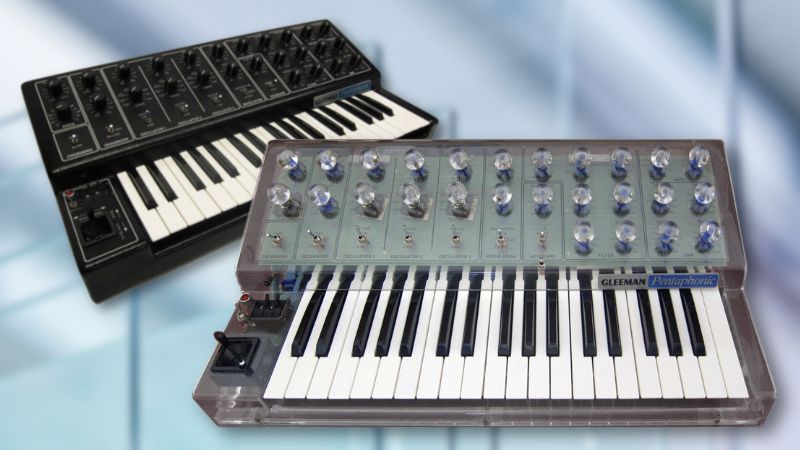
The first Pentaphonic arrived in 1981 in a plain black chassis with an integrated handle and built-in speaker, an "ultimate portable" weighing just 18 pounds. Underneath sat a hands-on control panel, a 37-note keybed, a 300-note real-time polyphonic sequencer, computer-tuned chorusing, and a joystick for pitch. At under $3,000, it went head-to-head with the Prophet-5 at $4,600, offering tuning stability its analog rivals couldn't achieve. They handmade around 30 black units with various, evolving features.
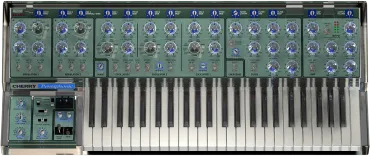
When a transparent version was suggested, Gleeman Instruments developed the Pentaphonic Clear. This model featured a clear acrylic housing, plexiglass knobs, and optional lighting that allowed audiences to see the circuitry illuminated against the green circuit boards. It came with a shoulder strap, a remote power supply to reduce weight, and a 20-foot cable, making it a fully equipped stage keytar. The Clear also brought the "Presetter" upgrade with 100 programmable patch memories, a two-axis joystick for simultaneous pitch and mod, an improved chorus, and a 600-note sequencer. Fully loaded, it was priced around $3,400. Fewer than 20 Clears were ever built.
The Gleeman Pentaphonic remains renowned for its rich, powerful, crystal-clear sound. Its exceptionally thick pads and string patches can make instruments like the OB-Xa sound thin by comparison, while delivering a sound reminiscent of a Memorymoog with remarkable clarity. The Complex 1 and Complex 2 oscillator waveforms produced bright, bell-like overtones, akin to Frequency Modulation (FM) synthesis, years before the DX7. However, the Pentaphonic lacked the grit and experimental features of its analog competitors, and its absence of an oscillator sync mode limited its sonic flexibility. Additionally, some performers found its 37-key range and lack of touch sensitivity restrictive. As the market shifted toward digital synthesizers in the mid-80s, the Gleemans wound down Pentaphonic production. In 1994, David Kean of the Audities Foundation bought the brothers' remaining parts inventory and assembled a small batch of new units — reportedly seven fresh Pentaphonics and seven Clears — keeping the flame alive for collectors.
Despite its scarcity, the Pentaphonic found its way into some notable hands. Jazz legend Oscar Peterson was so captivated by its sound that he bought a Clear immediately. Kevin Gilbert used one early in his career on the album NRG. The Moog Cookbook, Kansas, The Band, and R.E.M. put the Pentaphonic to work, and Depeche Mode's Martin Gore is counted among the owners. Surviving units surface rarely, and the Clear especially remains one of the most recognizable synths of its era.